

Oakland Arena reinvents connectivity for the modern fan experience
Oakland Arena needed to modernize its aging network infrastructure to support sold-out concerts and high-density events without disrupting its packed schedule. The venue’s legacy system struggled with latency, reliability, and coverage demands as attendance patterns shifted far beyond its original basketball-focused design. Working within structural limitations and a tight timeline, the arena completed a full Wi-Fi 7 and network refresh in just 13 days. The upgrade delivered faster, more reliable connectivity while creating a scalable foundation for future events.
Industry:
Large Public Venues
Partner:
Fortis Solutions
Products:
RUCKUS T670SN Wi‑Fi 7 Access Points
RUCKUS ICX® 7850 & 7550 Ethernet Switches
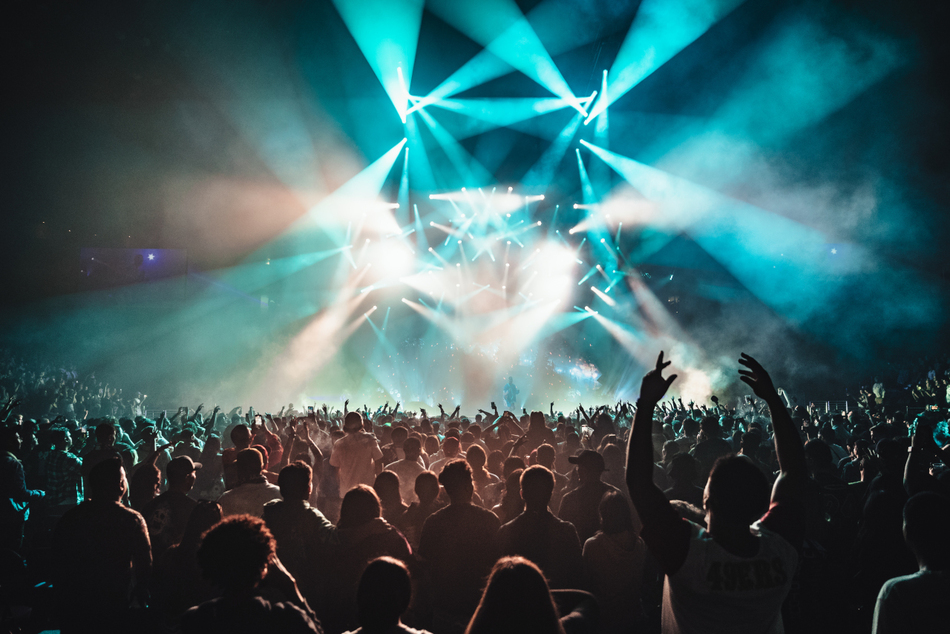
Since 2019, Oakland Arena has undergone a significant business transformation, pivoting from the home of the Golden State Warriors to a concert and events-driven venue. This shift fundamentally reconfigured the arena’s density requirements. While basketball games hosted roughly 200 people on the floor, sold-out concerts now pack nearly 2,000 fans into that same footprint. The tenfold increase in floor occupancy demanded a level of high-density coverage that the original basketball-centric configuration wasn’t designed to provide.
The structural limitations of the aging arena further complicated the upgrade. Drilling into concrete for under-seat cabling was incompatible with the arena’s rapid turnaround needs and budget; engineers had to deliver a strong signal from catwalks mounted at 80-100 feet above the floor. The existing infrastructure, which caused high latency, was also nearing the end of its life; the arena’s IT team was reduced to sourcing replacement parts from secondary markets like eBay just to stay operational.
All told, the 19,500-seat venue’s legacy infrastructure lacked modern beamforming and MIMO capabilities. It threatened high latency, buffering, and frequent disconnects — an abysmal fan experience — during sold-out events. With one of two wireless controllers failing only three months before the project’s start, the transition became a critical race against a booked schedule and tens of thousands of excited fans.
After the departure of its former pro basketball tenant, Oakland Arena seized the opportunity to modernize its network from the ground up. Today, the venue delivers connectivity that outperforms many newer arenas in coverage, capacity, and peak-time reliability.

The Challenge: Overcoming the challenges of a legacy major league basketball arena infrastructure
Since 2019, Oakland Arena has undergone a significant business transformation, pivoting from the home of the Golden State Warriors to a concert and events-driven venue. This shift fundamentally reconfigured the arena’s density requirements. While basketball games hosted roughly 200 people on the floor, sold-out concerts now pack nearly 2,000 fans into that same footprint. The tenfold increase in floor occupancy demanded a level of high-density coverage that the original basketball-centric configuration [BD2.1]wasn’t designed to provide.
The structural limitations of the aging arena further complicated the upgrade. Drilling into concrete for under-seat cabling was incompatible with the arena’s rapid turnaround needs and budget; engineers had to deliver a strong signal from catwalks mounted at 80-100 feet above the floor. The existing infrastructure, which caused high latency, was also nearing the end of its life; the arena’s IT team was reduced to sourcing replacement parts from secondary markets like eBay just to stay operational.
All told, the 19,500-seat venue’s legacy infrastructure lacked modern beamforming and MIMO capabilities. It threatened high latency, buffering, and frequent disconnects — an abysmal fan experience — during sold-out events. With one of two wireless controllers failing only three months before the project’s start, the transition became a critical race against a booked schedule and tens of thousands of excited fans.
After the departure of its former pro basketball tenant, Oakland Arena seized the opportunity to modernize its network from the ground up. Today, the venue delivers connectivity that outperforms many newer arenas in coverage, capacity, and peak-time reliability.
The Solution: Engineering speed built on proprietary automation
Oakland Arena relied on its long-term partnership with Fortis to lead this complex modernization project. RUCKUS® was selected for deployment due to its leadership in Wi-Fi 7 and proven success in other high-density professional sports venues. Beyond its standing as a leading network manufacturer, RUCKUS plays an active role in shaping the future of networking through participation in IEEE standards development and other industry alliances, helping define next-generation connectivity well beyond Wi-Fi 7.
The project scope was extensive: a full building refresh of approximately 300 access points (Wi-Fi 7 Hyper-Directional T670SN APs), new controllers, and a complete routing and switching upgrade. But the defining element of this deployment was its unprecedented speed. While typical arena projects often take months, this implementation was completed in 13 days. It was made possible in part by Fortis’ patented Source of Truth software, which extracted and converted legacy configurations into RUCKUS-compliant code. This automation replaced the manual labor of 10 to 20 engineers, allowing the arena to remain operational throughout the process.
Additionally, Fortis’ NetRaven platform provided the arena’s lean IT team with a single-pane-of-glass for real-time “red light, yellow light, green light” monitoring and auto-remediation.
By redesigning the network architecture, Oakland Arena now delivers up to 10x faster connectivity while reducing its access point footprint by 44 units — lowering infrastructure costs, simplifying operations, and making ongoing network management significantly more efficient.
"Source of Truth gave us the ability to automate the process and deliver a solution in world-class speed. And our Tier 3 engineers know these systems inside and out." — Myron Duckens, CEO, Fortis Solutions
“If you want a turnkey deployment that covers everything from surveying to maintenance, working with Fortis and RUCKUS is a seamless way to do that.”
Colby Tucker, Senior Director of Operations, Oakland Arena
Key Results: Network reliability for the next decade of entertainment
The new Wi-Fi 7 network was tested immediately during back-to-back sold-out concerts that pushed the venue’s infrastructure to its limits. Despite the high-density environment, Oakland Arena delivered seamless connectivity with zero disruption to ticket scanning, food and beverage operations, or guest experiences. The deployment not only improved immediate performance and reliability, but also created a scalable foundation designed to support future high-capacity entertainment and enterprise events for years to come.
- 8.22 TB of total traffic handled during a two-day sold-out concert “stress test”
- Supported a peak of 9.78k concurrent unique client devices
- Nearly 80 Mbps floor-level upload speeds
- Lower-bowl speed bursts nearing 98 Mbps
- All 26 deployed switches maintained 100% uptime during high-traffic events
- 280 access points deployed alongside a full switching and routing refresh
- Completed a full venue deployment in just 13 days amid a packed events schedule
- Maintained uninterrupted venue operations and protected revenue during the transition
- Deployed multi-gig and 10-gig capable switching infrastructure designed to support future connectivity demands for the next 6–10 years, ensuring the wired backbone can support future standards and rising connectivity demands

Contact Fortis Solutions for a turnkey deployment that covers everything from surveying to maintenance.


