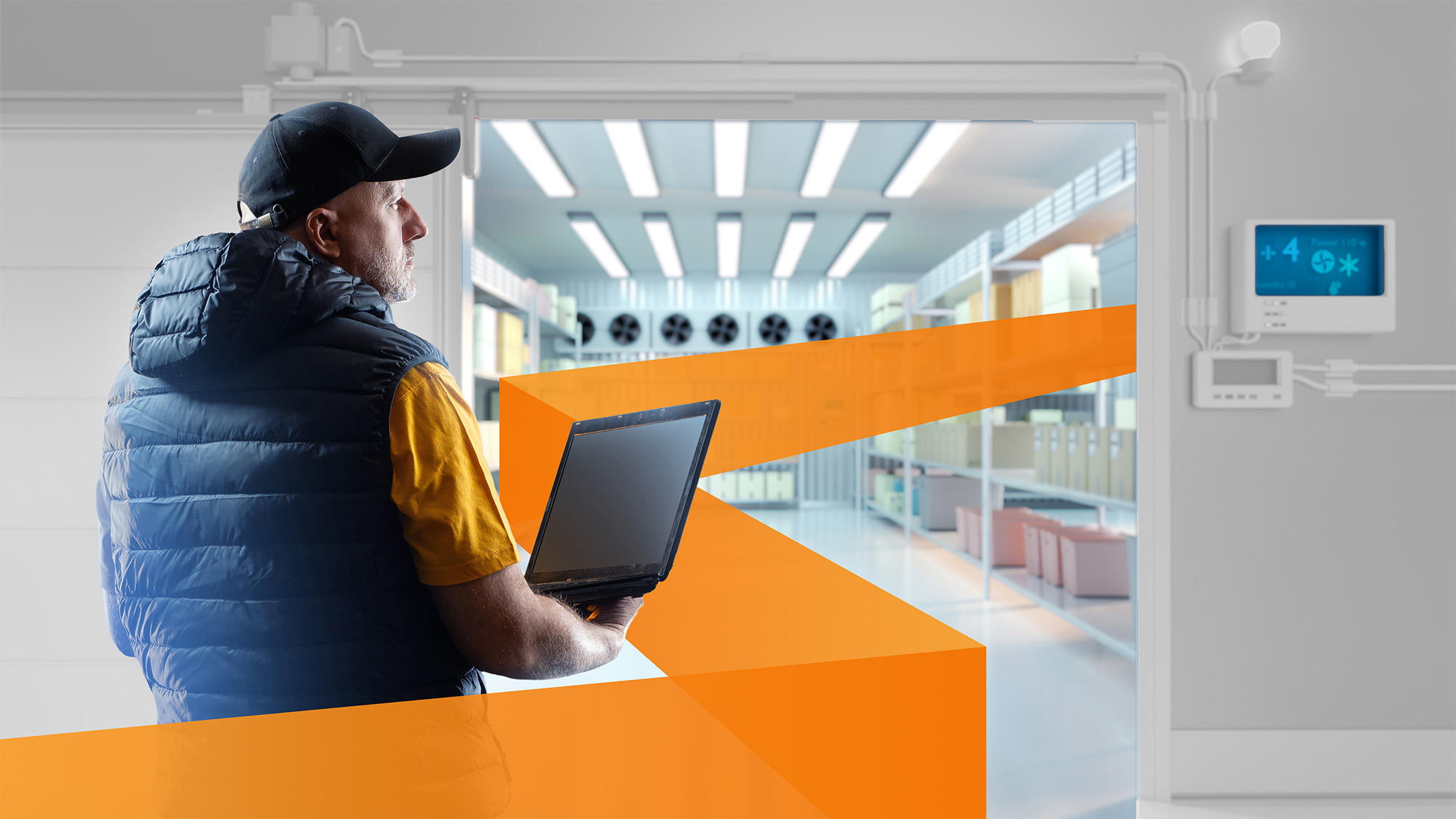


In manufacturing, warehousing, and logistics (MWL), "uptime" isn't just a metric - it’s the difference between operating and shutting down. Every minute of downtime leads to lost revenue, missed deadlines, and disrupted supply chains. Studies estimate the average cost of downtime in manufacturing alone is approximately $260,000 per hour [1].
Walk the floor of a modern plant or a high-density warehouse and you can feel the pressure. It’s not just about coverage anymore, it’s about ensuring deterministic connectivity in environments that are hostile to RF signals. We are talking about facilities packed with heavy concrete walls, dense metal racking, high ceilings, industrial motors generating interference, and extreme conditions ranging from dusty production lines to -40°C cold storage.
For Operational Leaders and IT/OT Directors, the mandate is clear: the network must work as hard as your people do. They need connectivity that is reliable, keeps production lines moving, and the workforce safe.
Recently the Wi-Fi Alliance announced a certification supporting 20MHz-only client devices for Wi-Fi 7. This has significant implications for industrial IoT, Automated Guided Vehicles (AGV), Autonomous Mobile Robots (AMRs), scanners and sensors that are common in MWL environments and often limited to devices supporting 20MHz Wi-Fi channels. This certification helps accelerate the proliferation of Wi-Fi 7 device ecosystem especially in MWL environments.
What Makes Wi-Fi So Challenging in MWL Environments?
MWL environments create a perfect storm of Wi-Fi challenges that general purpose enterprise networks simply aren’t built to handle. The three most critical challenges are:
Interference From Industrial Equipment
Industrial motors, welding arcs, conveyor systems, and variable-frequency drives (VFDs) all radiate EMI across the 2.4 GHz and 5 GHz spectrum. A robotic arm executing a precise pick-and-place sequence doesn’t get a second chance if its Wi-Fi signal drops mid-operation. A machine vision camera inspecting product quality on a moving line can’t function with lagging video. A barcode scanner on a picking cart can’t wait for reconnection. The tolerance for disruption is effectively zero.
Connectivity Gaps During Asset Movement
In a warehouse, assets are constantly moving. Forklifts, AGVs, and AMRs travel hundreds of meters per shift, crossing multiple access point coverage zones. In legacy Wi-Fi, mobile devices tend to hold onto a weakening AP signal longer than they should. When a mobile robot finally transitions to a stronger AP, it can experience a 2–3 second connectivity interruption—long enough for the robot to halt and create a floor-level traffic jam. In a busy distribution center, that’s a “lines down” situation.
A Fragmented 20 MHz IoT Device Ecosystem
Until now, facilities upgrading to Wi-Fi 7 faced a hidden barrier: most existing industrial IoT devices—sensors, scanners, controllers, AMRs—were designed around 20 MHz channels and could not take advantage of Wi-Fi 7 networks. The new Wi-Fi Alliance 20 MHz certification bridges that gap, allowing legacy IoT devices to be validated and operate on Wi-Fi 7 networks.
How Wi-Fi 7 Multi-Link Operation Improve Reliability
In legacy Wi-Fi, a device picked a frequency band (2.4GHz or 5GHz) and stayed there until it was forced to move. It was like driving on a single-lane road; if a truck (interference) blocked the lane, traffic slowed to a trickle.
Wi-Fi 7 MLO allows devices to simultaneously connect across multiple frequency bands - 2.4 GHz, 5 GHz, and 6 GHz. This is like upgrading to a multi-lane superhighway where devices can use all lanes simultaneously and steer clear of interference.
- Robust Connectivity: MLO maintains connections across multiple bands (2.4GHz, 5GHz, and 6GHz). If an AGV moves behind a metal rack that blocks the 5GHz signal, the 2.4 or 6GHz link keeps the data flowing without any drops or delays.
- Enhanced Mobility: MLO supports faster handover between access points in noisy conditions, minimizing disruption as mobile assets move across large coverage zones.
- Redundancy for Mission-Critical Ops: For real-time robotic coordination and safety sensors, MLO can transmit the same data packet across multiple bands simultaneously. This guarantees a redundant path, ensuring that even in a noisy factory floor full of welding arcs and motor EMI interference, the signal gets through.
Why RUCKUS? Engineered for the Harsh Reality of Manufacturing, Warehouse and Logistics
RUCKUS understands that industrial networking isn't just about speed; it's about reliability in harsh environments.
Ruggedized and Ready
Our industrial solutions are engineered for the realities of your environment.
- Extreme Durability: RUCKUS outdoor and industrial APs carry IP67 ratings, capable of operating from -40°C to +65°C - whether you are operating in a blast chiller or a sunbaked loading dock, the network stays up.
- Vertical Coverage: Modern logistics isn't flat. With high-bay racking systems that are typically 40+ feet, you need connectivity that works vertically. RUCKUS APs with programmable sector antennas and patented BeamFlex® technology adapts antenna patterns in real-time, steering signals around metal obstacles and up into the racking to keep forklifts connected at any height.
- Extended Battery Life: When IoT devices are operating at the edge of performance, their radios stay active longer and drain battery. RUCKUS access points deliver reliable links at the fastest speed enabling devices to communicate efficiently and power down their radios sooner resulting in extended battery life.
AI-Driven Network Management at Scale
Not every warehouse location has dedicated IT staff. RUCKUS One provides cloud-managed simplicity and comes with RUCKUS-AI, which transforms network operations by proactively detecting issues, identifying root cause and resolving problems autonomously at scale. In addition, RUCKUS AI continuously learns behavior and makes recommendations to improve network performance.
Future-Proof Your Supply Chain
The transition to Industry 4.0 is well underway. You are integrating more IoT sensors, more video analytics, and more automation than ever before. You need a network that scales without disruption.
With the new Wi-Fi Alliance certification for 20MHz-only devices and RUCKUS Wi-Fi 7 access points supporting MLO technology (such as the RUCKUS T670sn), you aren't just buying an access point; you are investing in operational resilience. You are ensuring that your workforce stays connected, your AGVs keep moving, and your downtime is minimized.
Ready to Eliminate Downtime in Your Facility?
RUCKUS is helping operations leaders across the manufacturing and logistics build reliable, safer, and smarter facilities.
Start building a resilient, future-ready network today. Get in touch with a RUCKUS expert or explore the RUCKUS Manufacturing, Warehousing and Logistics solution portfolio and case studies.
https://www.pingdom.com/outages/average-cost-of-downtime-per-industry/#:~:text=In%20the%20manufacturing%20industry%2C%20the,relies%20on%20its%20digital%20marketplace