
Authors

Dev Bhatt
Director, WW Vertical Marketing

Cody Morash
Categories
HospitalityIn this Article
Why Hotel Networks Are Now a Revenue Issue
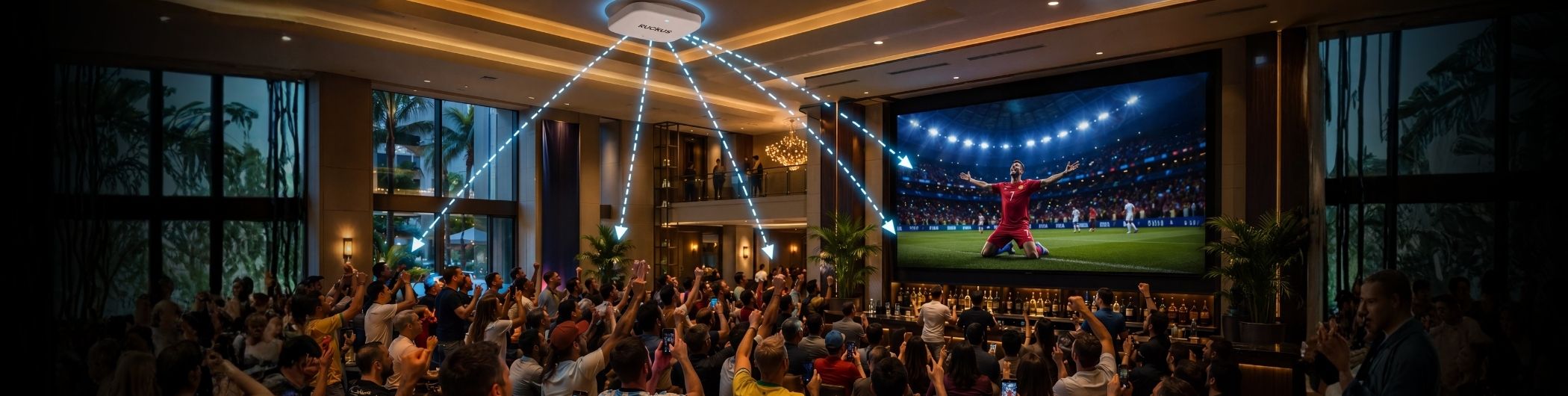
Hotel networks play a direct role in guest satisfaction, event success, and revenue performance. From guest rooms and public spaces to ballrooms and conference centers, reliable Wi‑Fi is a core part of the hospitality experience.
At the same time, hotel IT teams face growing pressure. Guest expectations for seamless, always‑on connectivity continue to rise, while conferences and events allow zero tolerance for disruption. Ballooning device counts across guest rooms, meeting spaces, and event venues demand reliable, low‑latency connectivity, and increasing IT complexity, staffing constraints, and rising energy costs make it harder to keep up using traditional, reactive network operations.
While conferences are a high‑value and visible revenue stream, the same network challenges also affect guest satisfaction, digital services, and repeat stays across the property, making connectivity a critical driver of overall hotel revenue.
This is why many hotel brands are moving toward agentic operations. Agentic operations use artificial intelligence to continuously monitor hotel networks, identify potential issues, and take corrective action before guests or events are impacted. Instead of reacting after complaints or service tickets appear, AI‑driven Wi‑Fi helps hotels reduce risk, protect revenue, and improve operational efficiency across the property.
The Hidden Cost of Poor Wi‑Fi at Conferences
Nowhere is network reliability more critical than during conferences and events. For large hotels and convention properties, the financial exposure is significant. The typical Tier‑1 brand with approximately 320,000 square feet of conference space hosting around 50 events per year can generate about $32 million in event revenue over a three‑year period.
When Wi‑Fi issues disrupt events, even a small number of refunds or aggressive discounts can impact the bottom line. If just 1 percent of event revenue is refunded due to connectivity problems, that represents approximately $320,000 in lost revenue over three years.
Beyond immediate financial loss, poor event experiences reduce customer satisfaction, weaken brand loyalty, and put future bookings at risk.
Why Reactive Network Operations Fail in Hospitality
Traditional network operations rely on alerts, dashboards, and manual troubleshooting. Issues are often identified only after guests complain or events are already impacted. This approach does not scale in hospitality because:
- Event traffic patterns change rapidly, both from event to event and throughout the day as attendees move between general sessions, breakouts, and shared spaces.
- Hundreds or thousands of devices connect simultaneously
- Guest, staff, and IoT systems share the same infrastructure
- Manual intervention takes too long during live events
- By the time IT teams respond, the guest experience and revenue impact has already occurred.
How Agentic Operations Change the Model
Agentic operations move hotels from reactive troubleshooting to proactive prevention.
Instead of simply reporting issues, AI agents continuously monitor network conditions, detect early indicators of congestion or instability, and plan and apply corrective actions automatically. Performance is validated in real time, with human‑in‑the‑loop oversight to maintain guardrails, brand standards, and operational control.
Conference center example
During a large conference, dense device usage, temporary layouts, and high‑bandwidth applications can quickly degrade performance. An agentic approach continuously monitors conditions across meeting and event spaces, detects early signs of congestion, and automatically adjusts the network before presenters, exhibitors, or attendees are impacted, helping protect both the event experience and the revenue tied to it.
Operational Efficiency and Sustainability at the Same Time
Agentic operations also help hotels address three persistent pressures: increasing IT complexity, staffing constraints, and rising energy costs.
Automated troubleshooting and centralized visibility reduce manual intervention and simplify day‑to‑day network operations, allowing IT teams to manage more properties effectively. Intelligent power management reduces energy usage in vacant rooms and underutilized conference spaces, supporting sustainability goals without compromising performance.
Purpose‑Built AI for Hospitality Networking
RUCKUS delivers a unified hospitality networking foundation that combines AI‑driven operations with modern Wi‑Fi infrastructure.
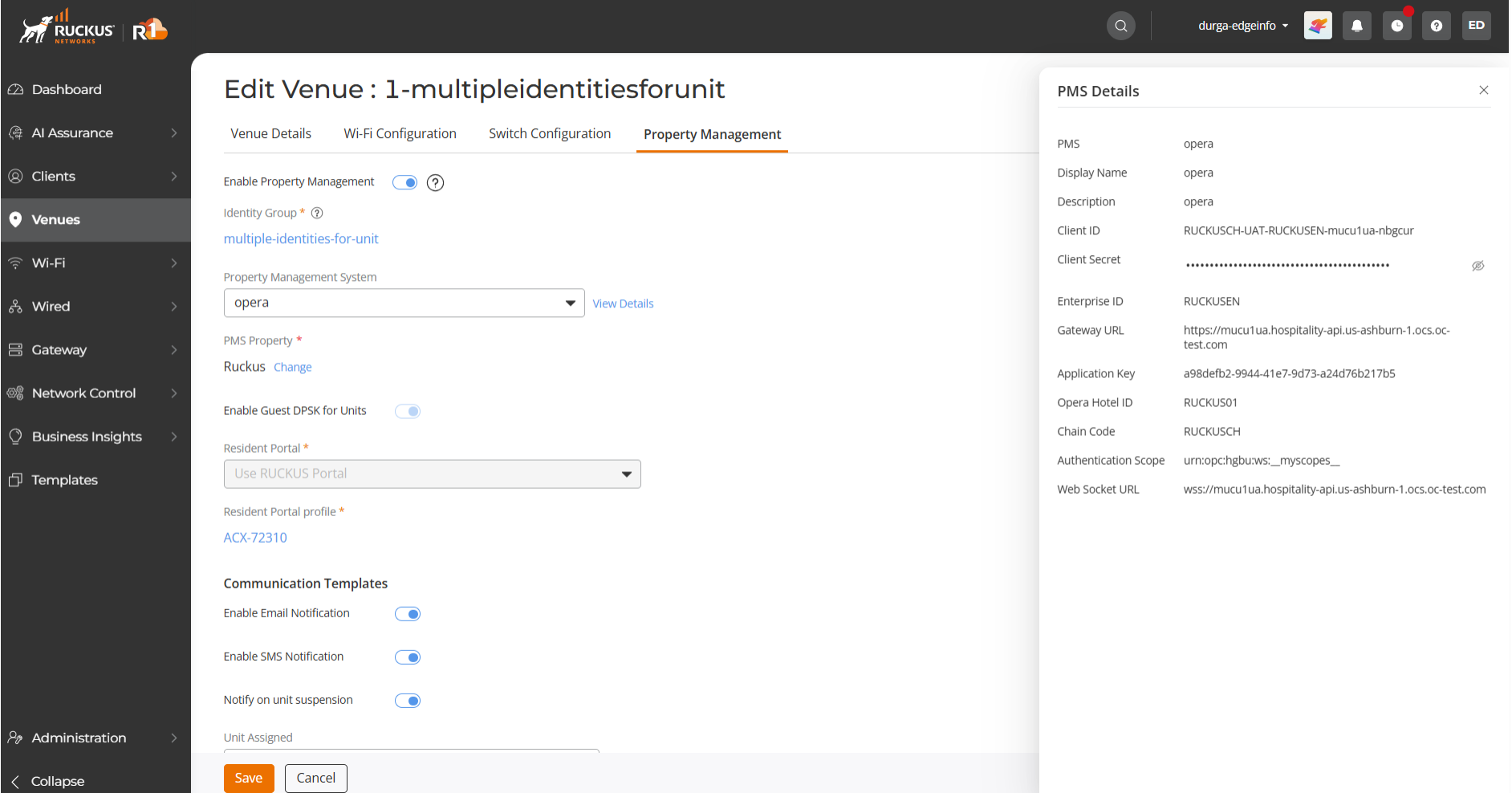
- RUCKUS One™ Hospitality Edition provides centralized visibility and AI‑driven insights across properties. RUCKUS is bringing to market an integration with the Oracle OPERA Property Management System (PMS), leveraging APIs to enable secure access and a seamless guest experience by automating Wi‑Fi connectivity tied to check‑in and check‑out, reducing operational overhead and costs.
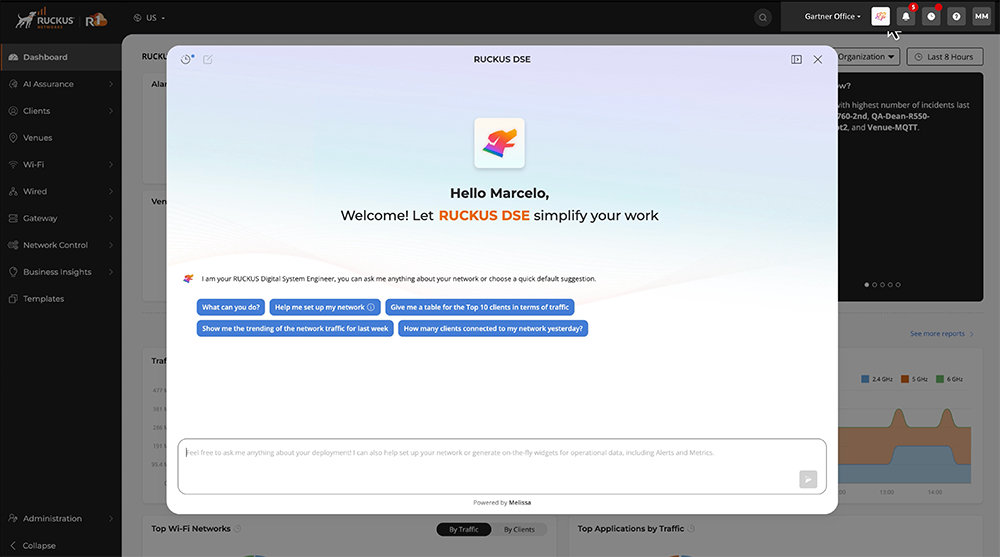
- RUCKUS AI, includes Digital Systems Engineer (DSE), a conversational AI assistant that enables IT teams to interact with the network using natural language for proactive troubleshooting, automated remediation, and consistent performance across guest rooms, public spaces, and event venues.
RUCKUS AI also automatically optimizes access point power consumption in vacant rooms and underutilized conference spaces, helping hotels improve reliability, control energy costs, and support sustainability goals.
- Wi-Fi 7 Access Points, including the new R575 and H375 expand the RUCKUS portfolio with high‑performance connectivity designed for guest rooms, conference centers, ballrooms, lobbies, and event venues. These access points support higher efficiency and density, complementing AI‑driven operations and providing a straightforward upgrade path for hotels modernizing their networks.
Together, AI‑driven operations and Wi‑Fi 7 infrastructure help hotels deliver reliable connectivity at scale while simplifying operations and protecting high‑value event revenue.
See Agentic Operations at HITEC 2026
RUCKUS is at HITEC this week showcasing how AI‑driven Wi‑Fi helps hotels reduce risk, protect conference revenue, and simplify operations. Read the full announcement.
Visit RUCKUS at HITEC
June 15–18, 2026 | Booth #1843
Henry B. Gonzalez Convention Center
Or explore RUCKUS hospitality solutions online to see how agentic operations improve outcomes across your property.
Source
Financial impact estimates based on RUCKUS Networks analysis and surveys of Tier‑1 hotel properties in North America. Event revenue and refund assumptions derived from SS‑300127‑EN_RUCKUS One Professional – Modern Connectivity for Hospitality (04/26).