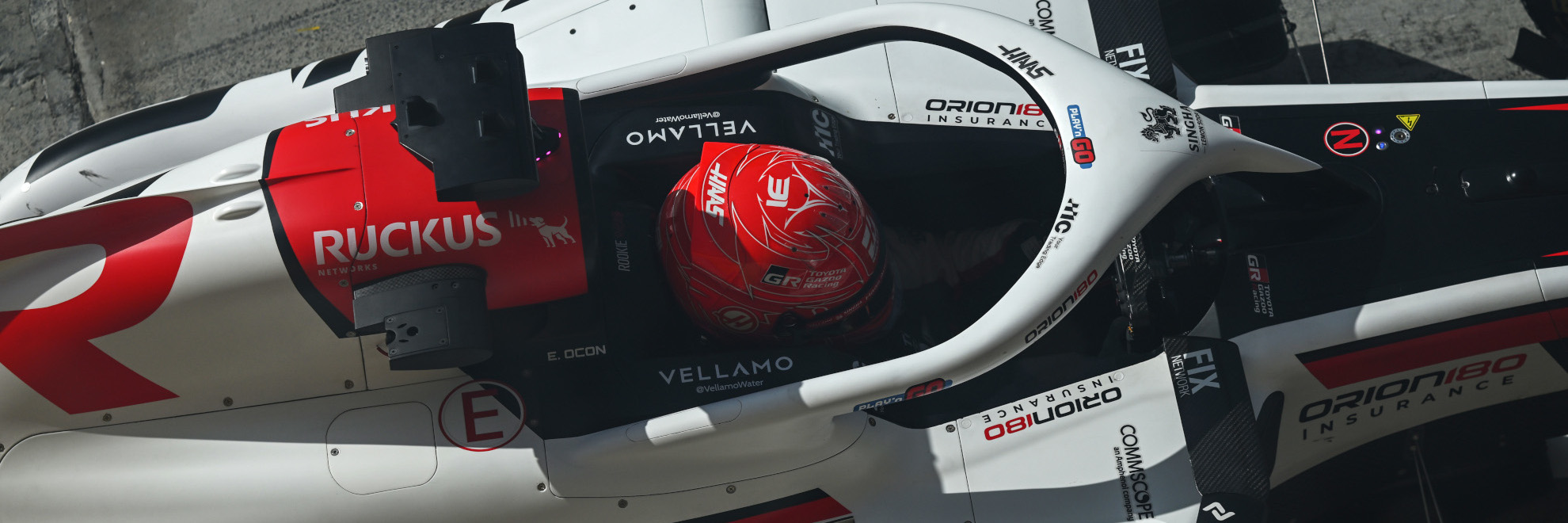

Always‑On Data at Full Throttle: TGR Haas F1 Team Powers Race Operations with RUCKUS Wi‑Fi 7 + RUCKUS One

15% Incident / ticket reduction

Up to 20% Average throughput improvement

Under 90 minutes From power‑on to “race‑ready network”

20% improvement Roaming session stability / fewer drops

Within ~3 minutes Direct contact with senior support engineer
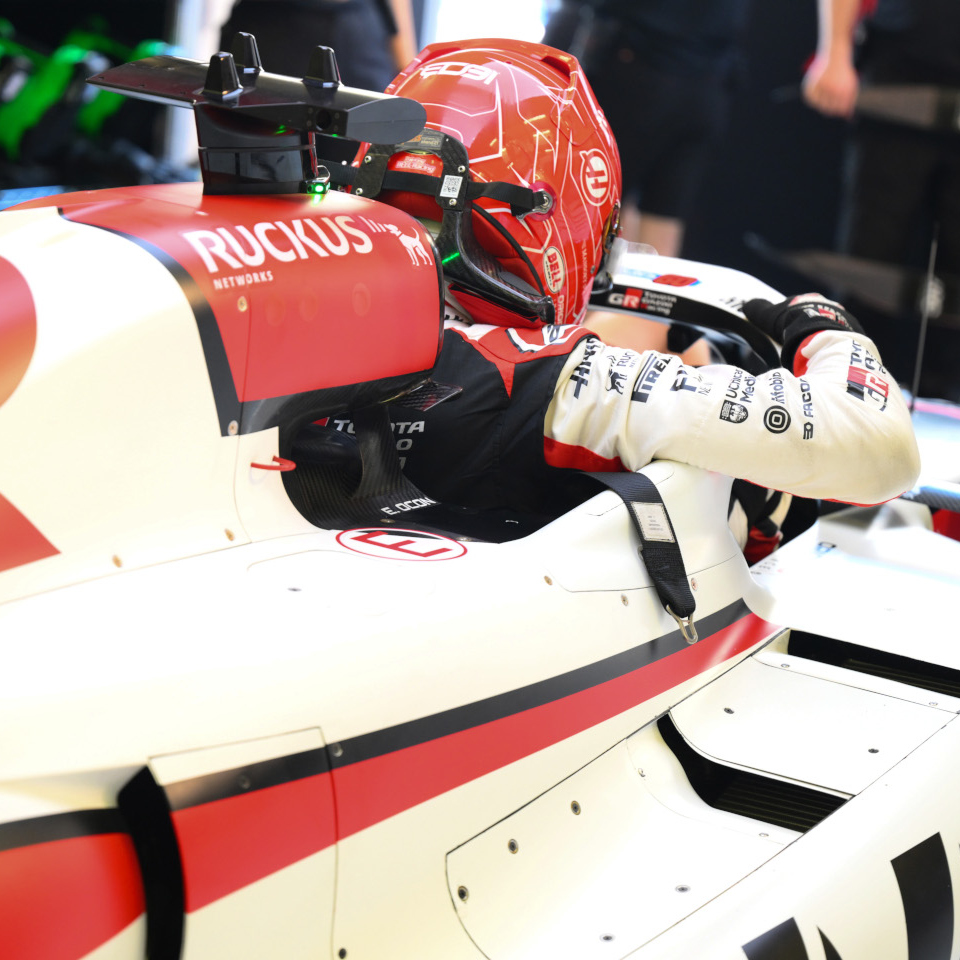
Customer Snapshot
Customer: TGR Haas F1 Team
Industry: Motorsport
Scale: 400–500 staff; 75–80 travel to each race
Environment: 24 global circuits + facilities in the UK, Italy, and the U.S.
Products: RUCKUS Solutions: RUCKUS R770 (indoor), RUCKUS T670 (outdoor), Ruckus One, Bulldog Support

“Visibility across the platform is excellent. We’ve been given a wide range of tools to understand the network and what’s happening at any given time.”
Jason Kew, Head of IT, TGR Haas F1 Team
The Challenge
TGR Haas F1 Team’s day‑to‑day operation is built on live data ‑ race telemetry, sensors, tyre systems, video feeds, simulation tools, and engineering platforms. If that data isn’t reliable, performance can be compromised. That makes connectivity race‑critical infrastructure, not a support service.
Race circuits are amongst the most congested Radio Frequency environments in sport: thousands of devices and multiple networks compete for limited spectrum during each event. As TGR Haas F1 Team increased its reliance on wireless systems, predictability and performance became operationally critical— especially under the time pressure of race weekends.
Additionally, TGR Haas F1 Teams’ trackside environment is uniquely unforgiving: the network is repeatedly packed up, shipped, rebuilt, and expected to perform immediately, at the next venue. The biggest variable isn’t the cabling or switches, it’s the Radio Frequency environment, which can change dramatically between permanent circuits and street circuits.
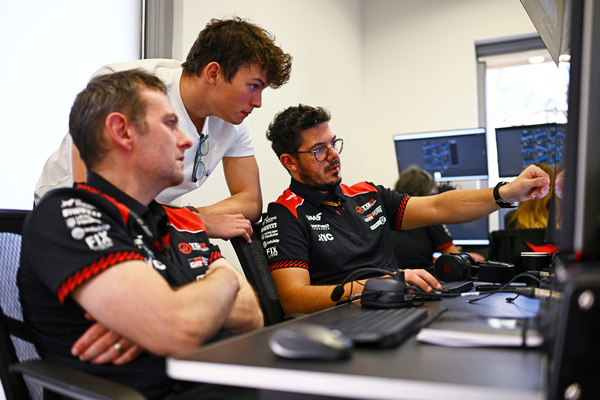
Key pressures included:
- Wireless congestion impacting consistency in the paddock
- Roaming interruptions between garage and motorhome/pit operations
- Growing device density and bandwidth demand from operational tools and video/data feeds
- Limited tolerance for downtime or troubleshooting during tight build/pack‑down windows
- Limited analytics/visibility in the prior environment, forcing reactive troubleshooting rather than proactive prevention
The Solution
TGR Haas F1 Team selected RUCKUS to build a repeatable wireless foundation designed to perform reliably across trackside deployments, factories, and global locations with different physical and Radio Frequency constraints.
Wi‑Fi 7: capable Access Points built for congested environments
The deployment centers on RUCKUS R770 indoor APs (Wi‑Fi 7 capable) and RUCKUS T670 outdoor APs, delivering a high‑performance platform designed for extreme density and interference. For TGR Haas F1 Team, Wi‑Fi 7 is less about peak speed and more about reliability. Wi‑Fi 7’s Multi‑Link Operation (MLO) improves resiliency by enabling traffic to be sent over multiple radios/bands. If one path is impacted by interference, another can carry the transmission, reducing retries and stabilizing performance in dynamic Radio Frequency conditions.
ICX 8200: high‑performance switching for reliable, high‑bandwidth backhaul
Given the demands of the TGR Haas F1 Teams’ network, matching the APs with appropriate switches to provide adequate bandwidth backhaul and Power‑over‑Ethernet meant installing a new switch infrastructure. In the ICX8200 range, TGR Haas F1 Team were able to select the right fit in switches, to meet their needs for high‑bandwidth, power‑demands, and low‑noise. The data telemetry and staff equipment at a minimum utilise 2.5Gbps network connections – a need met by even the most compact, fanless 8‑port ICX8200‑C08ZP switches.
RUCKUS One: proactive intelligence, faster root cause, less firefighting
RUCKUS One is the operational backbone: it provides real‑time visibility into network health and Radio Frequency behavior, identifies evolving issues early, and can remediate performance problems automatically, especially those related to channel use and interference patterns.
This is particularly valuable for venue‑to‑venue re‑deployments. Channels that worked at one circuit may be heavily occupied at the next; RUCKUS One and RUCKUS AI‑RRM optimize the network using coordinated, AI‑driven tuning, with no manual re‑tuning required.
Bulldog Support: senior expertise in minutes when it matters most
TGR Haas F1 Team upgraded to RUCKUS Bulldog Support to ensure that if a problem occurs, TGR Haas F1 Team can reach senior (Level 3) RUCKUS Support engineers within minutes – and often someone already familiar with TGR Haas F1 Teams' engineers and their environmental demands. This reduces delays and eliminates the “start from scratch” approach so‑often experienced when contacting tech‑support.
“In a paddock full of competing networks, interference is a certainty. Wi‑Fi 7’s multi‑link operation gives us a more resilient connection path.
RUCKUS’ adaptive Radio Frequency capabilities help the network adjust as conditions change. The result is a wireless platform we can re‑deploy repeatedly across the season with far less uncertainty. It’s a foundation we can build on as our data and device demands grow.”
Jason Kew, Head of IT, TGR Haas F1 Team
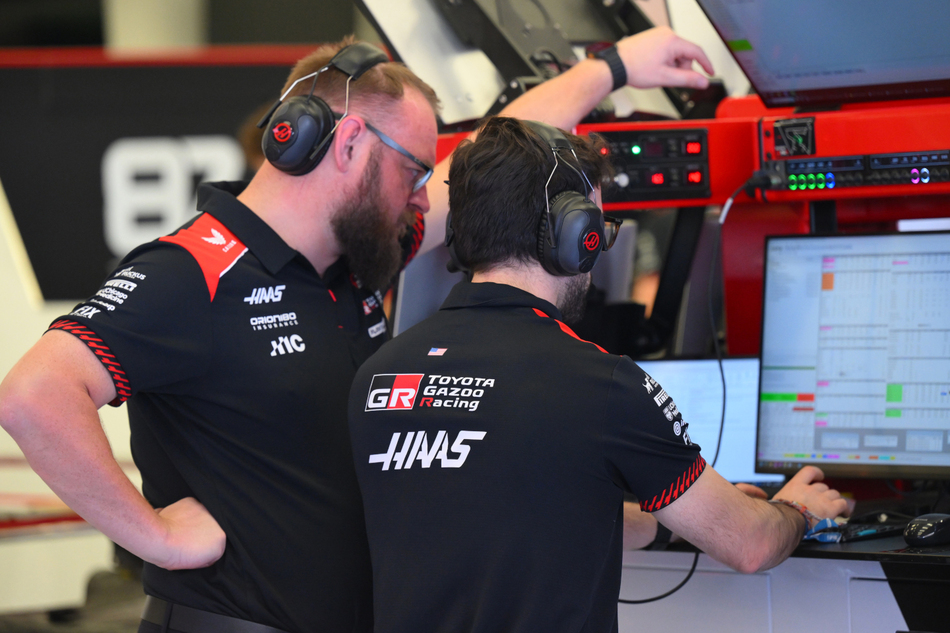
The Results
With a Wi‑Fi 7 foundation and RUCKUS One management, TGR Haas F1 Team strengthened wireless connectivity and consistency across race weekends and factory operations; supporting seamless roaming and reducing operational risk during critical sessions. The TGR Haas F1 Team gained improved visibility and control to proactively monitor performance, diagnose issues faster, and adapt to changing venue conditions with confidence.
Tangible outcomes (business + operational)
- More predictable trackside connectivity in highly congested Radio Frequency conditions
- Fewer network distractions for engineers during race operations due to proactive issue identification and automated remediation
- Seamless roaming between key operational areas (e.g., garage to motorhome)
- Faster access to expert help via Bulldog Support (Level 3 engineer in minutes) when required
- A scalable wireless platform designed to support future performance evolution without introducing instability or complexity
Architecture / technical highlights
- Wi‑Fi 7‑capable R770 indoor plus T670 outdoor for trackside and facility coverage
- Multi‑Link Operation (MLO) to improve reliability under interference by leveraging multiple radios/ bands
- RUCKUS One AI‑RRM operations: proactive issue detection, visibility, and automated remediation (including Radio Frequency/channel optimization)
- Adaptive Radio Frequency management to handle drastic venue‑to‑venue RF differences (fixed circuits vs street circuits)
- Bulldog Support with rapid access to senior engineers who understand the environment